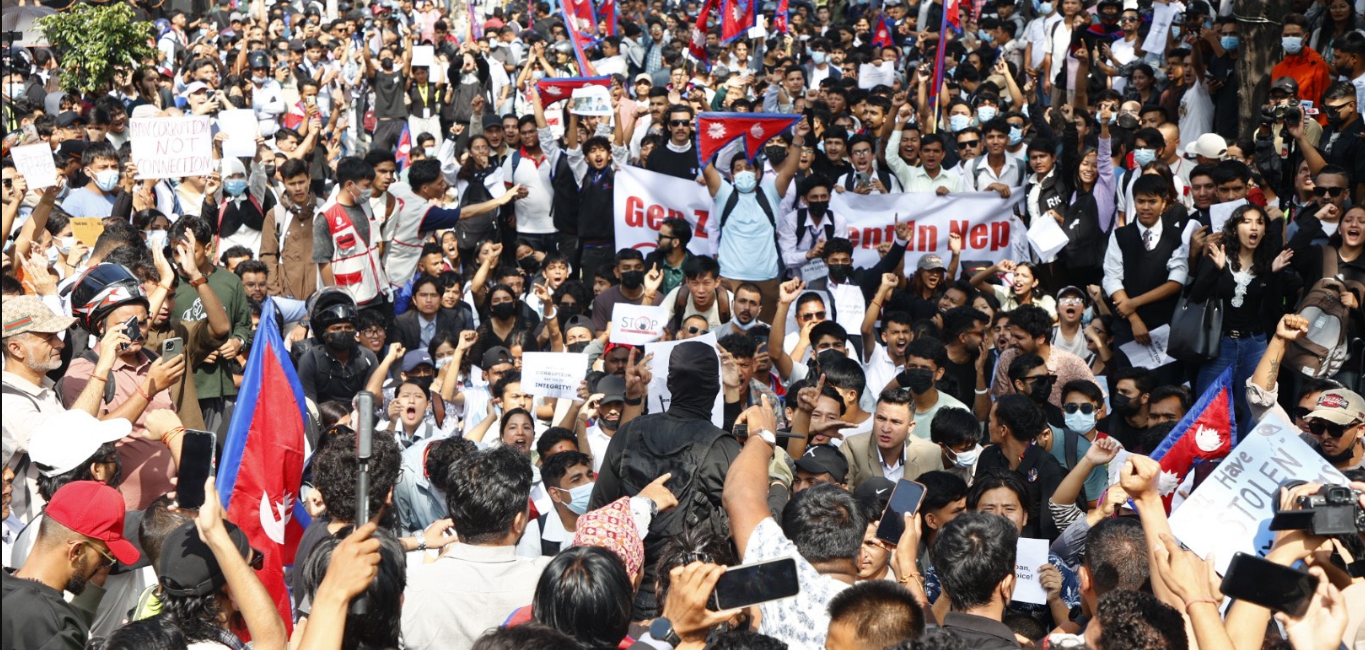
On 23 Bhadra last year, thousands of young Nepalis stepped onto the streets without political party banners, united by a singular demand: a state that works for its people. Triggered by systemic corruption, lack of economic opportunities, arbitrary governance decisions, and decades of institutional capture, the Gen Z movement delivered an unprecedented jolt to Nepal’s political establishment.
One year later, the political map looks undeniably different. Young leaders and fresh perspectives have penetrated executive and legislative spaces. Old political hegemonies have been disrupted, proving that the younger generation is no longer passive observers of governance.
However, political transition is merely a catalyst—not the final destination. The true test of the 23 Bhadra movement lies in whether the enthusiasm of the streets can be transformed into institutional integrity, the rule of law, and tangible improvements in everyday life.
1. A Seismic Shift in Political Representation
The movement’s most undeniable achievement was breaking open long-standing political gatekeeping. For decades, governance was dominated by entrenched leadership structures that treated public office as a rotational privilege rather than a public trust.
By demanding merit, transparency, and fresh leadership, the movement forced a fundamental recalibration. Youth engagement in civic discourse reached an all-time high, culminating in new leadership structures and electoral shifts that brought younger representatives into decision-making roles.
Seeing youth energy enter the halls of government is a essential milestone but representation alone does not guarantee good governance.
2. The Unanswered Questions
A year after the uprising, critical questions raised on the streets remain open. Replacing faces at the top does not automatically dismantle systemic inefficiencies:
- Institutional Independence: Are state regulatory and anti-corruption bodies functioning without political interference?
- Meritocracy over Patronage: Have public appointments, civil service postings, and opportunity distributions shifted from nepotism (“हाम्रो”) to merit (“राम्रो”)?
- Economic Opportunities & Migration: Has a clear, actionable framework been built to foster domestic entrepreneurship and quality employment, so young Nepalis are not forced to seek opportunities abroad?
- Justice and Care: Have victims and injured citizens of the movement received systematic support, and have incidents of violence and state overreach been impartially investigated?
A democracy cannot subsist on symbolic wins. Without structural reform in everyday life, health, education, business environments, and judicial independence, the optimism of last September risks turning into deep civic fatigue.
3. Shifting from Surface Noise to Fact-Based Questioning
Protests create momentum, but institutional accountability requires sustained, rigorous engagement. Public discourse too often gets stuck in broad frustration—relying on superficial criticism without digging into policy specifics.
Building a functional democracy requires moving from complaining to questioning:
When citizens ask precise, evidence-based questions about policy implementation, budget allocation, legislative performance, and public procurement, decision-makers are held accountable to measurable standards rather than political rhetoric.
4. The Path Ahead: Institutionalizing the Legacy of 23 Bhadra
As we mark this one-year milestone, the focus must shift from political disruption to long-term institutional building. For Nepal’s youth networks, civil society, and newly elected officials, the roadmap requires three clear priorities:
- Policy Leadership & Legislative Oversight: Young leaders in power must champion concrete legislative frameworks—from anti-corruption reforms and digital governance to simplified business regulations to make everyday life better and create opportunities.
- Local Accountability Networks: Civic monitoring must extend beyond Kathmandu into municipal and provincial assemblies, ensuring that governance reforms reach marginalized communities across all provinces.
- Protection of Democratic Norms: Rule of law must be applied equally. Freedom of expression, peaceful dissent, and transparent public processes are non-negotiable pillars of a resilient democracy.
The legacy of the Gen Z movement will not be judged by the speeches made on the anniversary of 23 Bhadra, but by the integrity of state institutions five, ten, and twenty years from now. The street movement started the conversation; disciplined, fact-based civic questioning must finish it.