Mero Bidhayak, Mero Chaso Successfully Conducted in Pokhara, Gandaki Province
Pokhara, Gandaki Province | 17–18 January
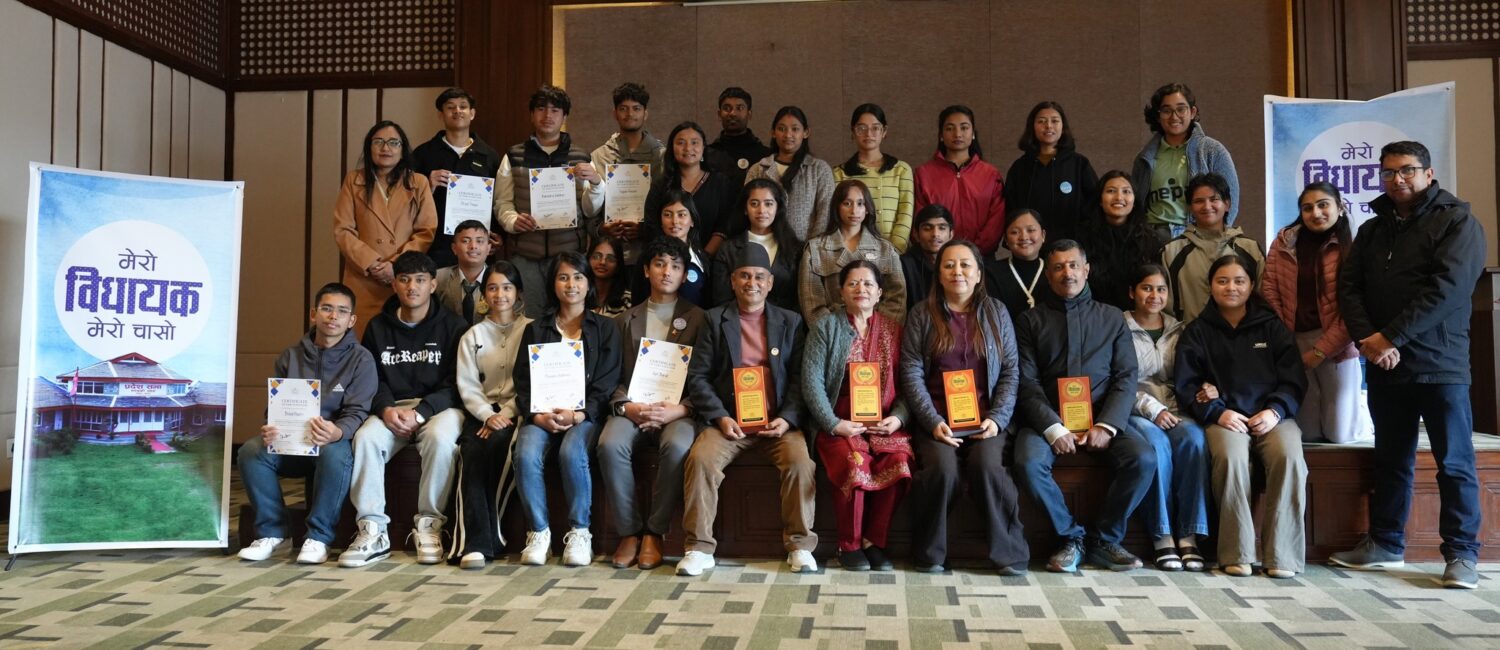
Mero Bidhayak, Mero Chaso, a youth-centered civic engagement initiative, was successfully conducted in Pokhara, Gandaki Province, on 17–18 January, with the participation of 26 young people from diverse backgrounds, the majority of whom were under the age of 22.
The two-day program was designed to strengthen democratic engagement among youths by improving their understanding of provincial governance and creating a direct space for dialogue with elected representatives. The program was implemented in line with the core objective of Mero Bidhayak, Mero Chaso—to move youth engagement beyond elections and toward informed, continuous participation in democratic processes.
Day 1: Youth Orientation Workshop on Provincial Governance
The first day focused on a Youth Orientation Workshop: “Building Democratic Engagement through Legislative Literacy.” The session aimed to demystify provincial politics and help participants understand how the Provincial Assembly functions and why it matters in their everyday lives.
The workshop covered:
- the purpose and structure of the Provincial Assembly,
- how provincial legislative processes work,
- the roles and responsibilities of Provincial Assembly Members, and
- the limitations of what Assembly Members can and cannot do within the constitutional framework.
The session was facilitated by Mr. Durlabh Kumar Pun Magar, Secretary of the Lumbini Provincial Assembly, who presented complex legislative concepts in an accessible and practical manner. Through interactive discussions, participants were encouraged to ask questions, challenge assumptions, and relate governance structures to real-life issues faced by citizens.
For many participants, this was their first in-depth exposure to how laws and policies are made at the provincial level.
Day 2: Youth–Representative Dialogue
Building on the learning from the first day, the second day was dedicated to an open dialogue between youths and elected representatives. Participants actively shared their concerns, expectations, and reflections on politics, representation, and accountability.
Several youths expressed that prior to the workshop, they believed politics and law-making were not meant for ordinary people—especially young citizens. Through the sessions, however, they came to realise that laws, policies, and political decisions directly shape daily life, from public services to opportunities and rights.
Many participants also reflected on changing youth engagement patterns following the Gen Z movement. While several had already developed the habit of following national news, the program deepened their understanding of the importance of also following provincial assemblies, local governments, and the House of Representatives—recognising that these institutions, and the representatives elected to them, play a critical role in shaping everyday governance.
This collective realisation marked one of the most meaningful outcomes of the program, demonstrating a shift from passive awareness to active civic consciousness.
Key Outcomes
- Increased understanding of provincial legislative structures and processes among young participants
- Greater awareness of the relevance of politics and law-making in daily life
- Strengthened confidence among youths to engage in dialogue with elected representatives
- Reinforced the importance of inclusive and informed youth participation in democratic governance
Mero Bidhayak, Mero Chaso continues to serve as a platform for dialogue, discussion, and democratic learning—promoting legislative literacy and strengthening the relationship between young citizens and their elected representatives at the provincial and local levels.